
Explore DesignShifts
Here, you’ll find the DesignShifts we’re exploring both in theory and in practice. Each topic explores Shifting the posture, power, perspective, practice, and the purpose of design.
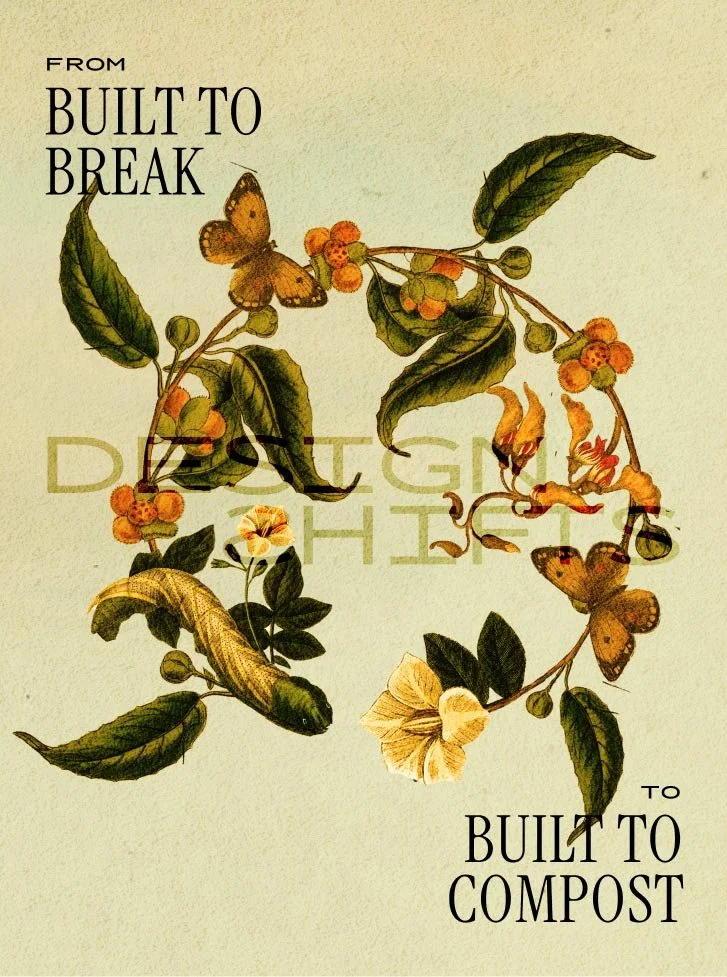
DesignShift: From Built to Break to Built to Compost
How did we go from building cathedrals to building trash? When did "built to break" become our business model?
Our great-grandparents built houses that stood for centuries and tools that outlived their makers. Today, the average smartphone dies in two years, fast fashion dissolves after a dozen wears, and appliances break the day after their warranty expires.
We live on a planet drowning in our creations, yet we can't stop creating. Every factory churns, every 3D printer hums, every assembly line rolls forward, adding to a world already choking on abundance. The old answer was built to last: make it once, use it forever. The current answer is built to break: make it cheap, toss it quick: planned obsolescence. When "disposable" stopped being a convenience and became a catastrophe, neither approach worked for a finite earth with infinite appetite.
So what if the future of making isn't about lasting longer or breaking faster, but about returning home? hashtag#DesignShift: from build to break to built to compost.
What if we started designing like nature does—where nothing is waste, everything feeds something else, and the end of one thing becomes the beginning of another? We can keep creating, but only if what we create knows how to die well. Built to compost means built to complete the circle, to honor the cycles that sustain life itself.
In a world that doesn't need more things, maybe we need things that know when to become something else entirely.

DesignShift: Influencing Nature to Influenced by Nature
Nature used to influence how we designed. Now how we design influences nature.
We used to design tools based on the material we had at hand. We used to let the wind guide how we constructed buildings. Our design choices (and life) used to be influenced by the natural, local environment. Now, we’re creating global solutions and implementing technologies that help us (momentarily) override nature. The price we pay in disconnection and destruction.
DesignShift: What would it look like to shift from design decisions that influence nature to nature influencing our design decisions? How can we let nature guide us? What are inspiring movements and projects you’ve seen?
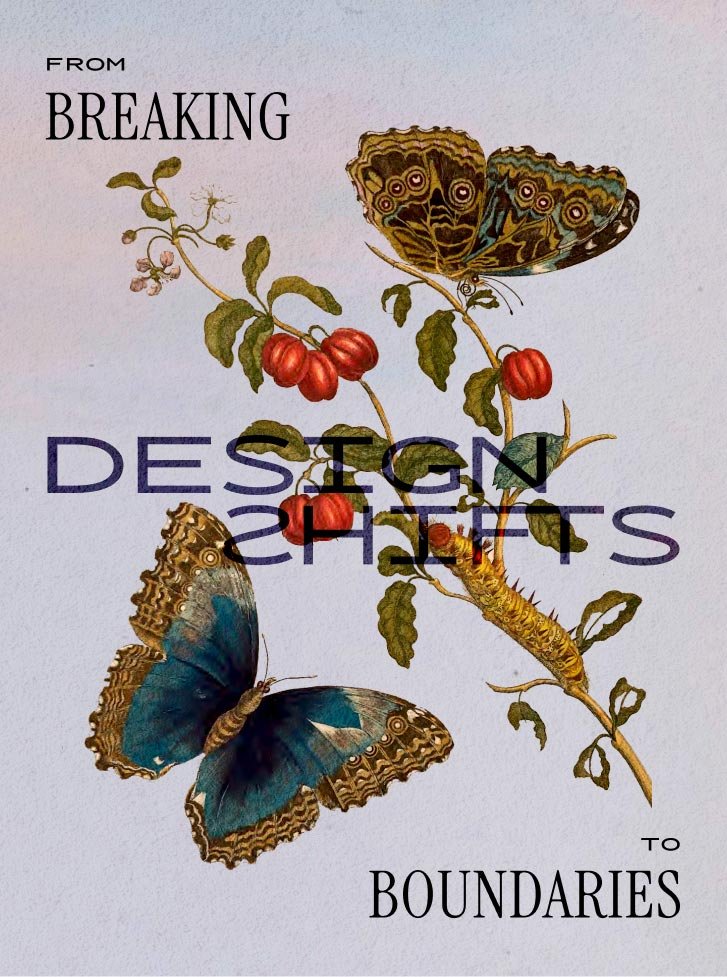
DesignShift: From Breaking to Boundaries
How about… instead of moving fast and breaking “things” we slowed down and prioritized human and planetary boundaries?
Moving fast doesn’t just lead to broken things, it leads to broken-down people and a broken planet. In pursuit of what is next and what’s new, we're using the earth and people beyond their boundaries.
Not enough time to make sure that we don’t harm the planet through our work… Not enough time to build trust with communities… not enough time to create healthy team environments… all in pursuit of what? Much of our design work hides behind the illusion that “it will all be worth it in the end when we’ve launched that next “xyz.” It almost never is.
DesignShift: how might we shift from breaking things to designing within existing boundaries?
Join us!
Sign up for updates on my writing, events, and upcoming courses